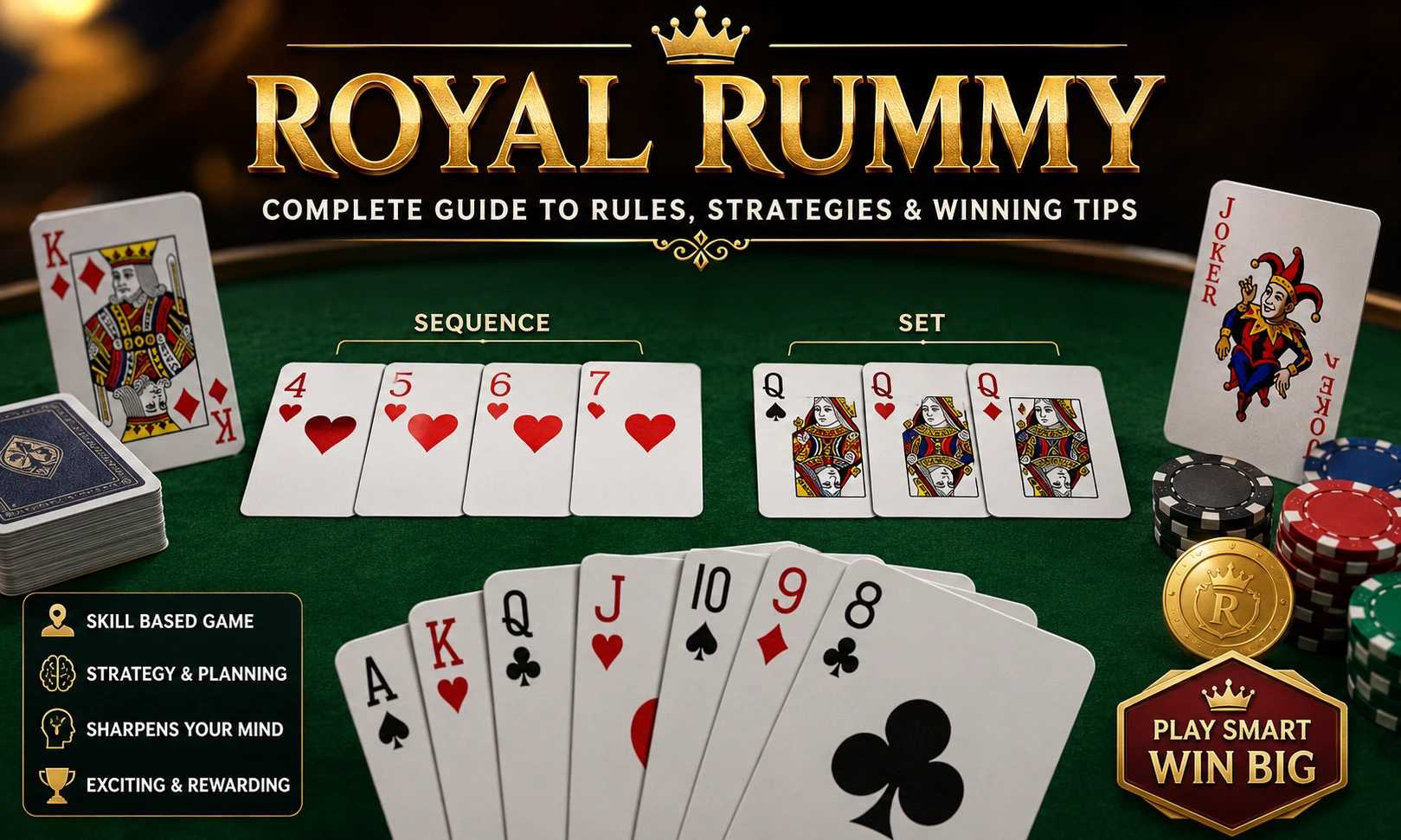










Rummy is one of the most popular card games played in different formats around the world. With the growth of smartphones and online gaming platforms, traditional rummy has become easier to access through websites and mobile applications. Today, players can find different rummy formats, including classic rummy, points rummy, pool rummy, deals rummy and variations commonly associated with terms such as Rummy 51.
This complete guide to All Rummy explains the basics of rummy, how different formats work, what Rummy 51 means in different contexts, common rules, gameplay strategies, card combinations, online rummy apps, bonuses, safety considerations and responsible gaming practices.
The goal of this guide is to give beginners a clear starting point while also providing useful information for experienced players who want to understand different rummy formats.
Table of Contents
- What Is All Rummy?
- Understanding the Rummy Card Game
- What Is Rummy 51?
- How Rummy 51 Works
- Basic Rummy Rules
- Understanding Sequences and Sets
- Pure Sequence and Impure Sequence
- How to Start Playing Rummy
- Different Types of Rummy Games
- Points Rummy
- Pool Rummy
- Deals Rummy
- Indian Rummy
- Online Rummy Games
- Rummy Apps
- How to Choose a Rummy Platform
- Rummy Bonus and Promotions
- Beginner Strategies
- Advanced Rummy Strategies
- Common Mistakes to Avoid
- Rummy 51 Tips
- Responsible Gaming
- Online Safety and Account Security
- Frequently Asked Questions
- Conclusion
What Is All Rummy?
All Rummy is a broad term that can be used when discussing the different rummy games, formats, rules and online platforms available to players.
Rummy itself is a family of card games based primarily on arranging cards into valid combinations. Depending on the particular variant, the number of cards, scoring system, number of players and winning conditions can differ.
The central concept remains similar: players draw and discard cards while attempting to arrange their hand into valid sequences and sets.
For someone searching for all rummy, it is useful to understand that there is not always one universal rule set. Different rummy variants can have their own rules.
That is why learning the fundamentals first is important.
A good rummy guide should answer questions such as:
- What is rummy?
- How does a rummy game work?
- What is a valid sequence?
- What is a set?
- What is Rummy 51?
- Which rummy formats are available?
- How do online rummy games work?
- How can beginners improve their gameplay?
- What should players check before using a rummy app?
This guide covers these topics step by step.
Understanding the Rummy Card Game
Rummy is generally based on forming combinations from cards in your hand.
The most important combinations are:
- Sequences
- Pure sequences
- Impure sequences
- Sets
The exact requirements can vary according to the rummy variant.
In many Indian-style rummy games, the objective is to arrange the cards into valid groups before declaring.
For example, cards such as:
5♥ – 6♥ – 7♥
form a sequence because they are consecutive cards from the same suit.
Similarly:
8♣ – 8♦ – 8♠
can form a set because the cards have the same rank but different suits.
Understanding these combinations is one of the first steps toward becoming comfortable with rummy.
What Is Rummy 51?
Rummy 51 is a keyword commonly associated with rummy gameplay and specific rummy formats or platforms. However, the exact meaning of “51” can vary depending on the game, website or rules being referred to.
Players should therefore check the rules of the specific Rummy 51 game or platform before starting.
The number 51 may refer to a scoring target, a particular format, a variation of gameplay or simply a product/platform name.
This is important because players should never assume that every game using the term “Rummy 51” follows exactly the same rules.
Always review:
- Number of cards
- Number of players
- Winning conditions
- Scoring system
- Sequence requirements
- Declaration rules
- Bonus conditions
- Entry requirements
- Withdrawal rules, where applicable
A clear understanding of the specific rules can prevent confusion during gameplay.
How Rummy 51 Works
If you are exploring Rummy 51, begin by identifying the exact version you are playing.
Before entering a game, look for the rules or help section of the platform.
Pay attention to the following:
1. Game Objective
Understand what you need to accomplish to win.
2. Card Arrangement
Learn how sequences and sets are created.
3. Scoring
Check how points are calculated.
4. Winning Condition
Understand what constitutes a valid declaration.
5. Penalties
Find out what happens when a declaration is invalid or a player loses.
6. Game Limits
Check whether there are restrictions regarding entry amounts, tables or game duration.
This basic preparation is useful for both beginners and experienced players.
Basic Rummy Rules
Although rules differ between variants, many rummy games follow a similar gameplay structure.
A typical round involves:
- Cards are dealt to players.
- Players organize their cards.
- A player draws a card.
- The player evaluates possible combinations.
- One unwanted card is discarded.
- The next player takes a turn.
- Players continue creating valid combinations.
- A player declares when the required conditions are satisfied.
- The declaration is checked according to the rules.
The winner is determined according to the particular rummy format.
Because rules can vary, players should always read the rules of the individual game rather than assuming that one variant works exactly like another.
Understanding Sequences and Sets
What Is a Sequence?
A sequence is generally a group of consecutive cards belonging to the same suit.
Example:
4♠ – 5♠ – 6♠
This is a consecutive sequence.
Another example:
9♦ – 10♦ – J♦
is also a sequence.
Sequences are extremely important in Indian-style rummy.
What Is a Set?
A set normally contains cards with the same rank but different suits.
For example:
7♠ – 7♥ – 7♦
forms a set.
Another example could be:
K♣ – K♦ – K♥
The exact number of cards required for a set may depend on the particular variant.
Pure Sequence and Impure Sequence
Pure Sequence
A pure sequence generally consists of consecutive cards of the same suit without using a joker as a substitute.
Example:
3♥ – 4♥ – 5♥ – 6♥
This is a pure sequence.
Impure Sequence
An impure sequence can contain a joker substituting for a missing card, depending on the rules.
For example, a hand could contain:
7♣ – 8♣ – Joker – 10♣
where the joker represents the missing 9♣.
The exact rules surrounding jokers vary by game, so players should verify them before playing.
How to Start Playing Rummy
Beginners should not immediately focus on complicated strategies.
Instead, learn the game in stages.
Step 1: Learn the Rules
Understand the specific rummy variant.
Step 2: Learn Card Combinations
Practice identifying:
- Pure sequences
- Impure sequences
- Sets
- Unwanted cards
Step 3: Practice Without Pressure
Use free or practice modes where legally and safely available.
Step 4: Observe Other Players
Pay attention to which cards players pick and discard.
Step 5: Improve Your Decision-Making
With practice, you can become better at deciding which cards to keep and which to discard.
Different Types of Rummy Games
There are several popular rummy formats.
The most commonly discussed include:
- Points Rummy
- Pool Rummy
- Deals Rummy
- Indian Rummy
- Gin Rummy
- 500 Rummy
- Other regional and platform-specific variants
Each game can have different rules.
Therefore, someone searching for all rummy games should understand that “rummy” is a broad category rather than a single game.
Points Rummy
Points Rummy is generally designed around points-based scoring.
Players usually play individual rounds, with points assigned to cards and the winner determined according to the rules.
Because rounds can be relatively short, this format is often popular among online players.
However, the exact scoring system should always be checked on the platform being used.
Pool Rummy
Pool Rummy is based on cumulative scoring.
Players continue playing rounds until certain conditions are met.
Common formats may use predetermined point limits.
For example, some variants can be based around thresholds such as 101 or 201 points.
The precise rules can differ, so players should review the table rules before joining.
Deals Rummy
Deals Rummy typically gives players a predetermined number of chips or points.
Players compete over multiple rounds.
The player with the best overall result at the end of the predetermined number of deals wins according to the rules.
This format can require a slightly different strategy because players need to think beyond a single round.
Indian Rummy
Indian Rummy is a popular rummy format based on arranging cards into sequences and sets.
A standard game may involve 13 cards per player, although exact rules can differ by platform and variant.
One of the most important concepts is creating the required sequence combinations before making a valid declaration.
For beginners, the best approach is to understand the rules first rather than trying to memorize advanced tactics.
Online Rummy Games
Online rummy has changed how people access traditional card games.
Instead of needing a physical deck and table, players can use websites or applications where available.
Online platforms can provide features such as:
- Multiple game formats
- Practice tables
- Tournaments
- Leaderboards
- Bonuses
- Game history
- Player profiles
- Digital wallets
- Customer support
However, these features differ from one platform to another.
Before using an online rummy service, check its rules, privacy information, security practices, age requirements and applicable laws.
Rummy Apps
A rummy app allows users to access rummy games through smartphones or tablets.
Before installing any app, consider the following:
App Reputation
Check whether the app comes from a legitimate source.
Security
Avoid downloading applications from suspicious third-party websites.
Privacy
Review what information the application collects.
Permissions
Do not grant unnecessary permissions.
Rules
Read the terms and conditions before creating an account.
Payment Information
If the platform involves real-money transactions, carefully review deposit, withdrawal, refund and verification policies.
How to Choose a Rummy Platform
Not every rummy platform is the same.
Before choosing one, consider:
1. Legitimacy
Check whether the operator provides clear information about its company and services.
2. Rules
The rules should be easy to locate and understand.
3. Security
Look for secure account and payment procedures.
4. Customer Support
A reliable platform should provide a clear way to contact support.
5. Responsible Gaming
Look for tools and information that encourage responsible play.
6. Terms and Conditions
Always read important conditions before depositing money or accepting promotions.
Rummy Bonus and Promotions
A rummy bonus may be offered by some online platforms as part of promotional campaigns.
Examples can include:
- Welcome offers
- Deposit promotions
- Cashback offers
- Tournament promotions
- Referral rewards
- Promotional credits
However, a bonus is not automatically free money.
Players should carefully examine:
- Eligibility
- Minimum deposit
- Wagering or play-through conditions
- Expiration date
- Withdrawal restrictions
- Maximum bonus limits
- Applicable games
Never accept an offer without understanding its terms.
Beginner Rummy Strategies
There is no guaranteed strategy that can make a player win every rummy game.
Rummy involves decision-making, probability and, depending on the format, interaction with other players.
Nevertheless, beginners can improve their gameplay by following some basic principles.
Create a Pure Sequence Early
If the rules require a pure sequence, prioritizing one can simplify the rest of the hand.
Remove High-Value Unwanted Cards
If cards are not helping create combinations, holding them for too long may increase potential points lost in some formats.
Observe Discards
The cards other players discard can provide clues about what combinations they may not need.
Avoid Random Discards
Every discard should have a reason.
Keep Your Hand Organized
Arrange cards by suit and rank so that possible combinations are easier to identify.
Advanced Rummy Strategies
Experienced players often pay attention to more than their own cards.
Track Important Cards
Try to remember cards that have already appeared.
Watch Opponent Behavior
Repeatedly picking cards from a particular suit or rank can provide clues about possible combinations.
Change Your Plan
Do not become attached to one combination.
If the cards are not developing as expected, adjust your strategy.
Manage Risk
Holding too many high-value cards can sometimes increase potential losses.
Think About the Next Turn
A strong player considers not only the current discard but also what cards may become useful later.
Rummy 51 Tips for Beginners
If you are specifically learning Rummy 51, use these practical tips:
Tip 1: Read the Exact Rules
Never assume the rules from another rummy variant apply automatically.
Tip 2: Understand the Scoring
Know how points are calculated.
Tip 3: Learn Valid Combinations
Practice identifying sequences and sets.
Tip 4: Organize Your Cards
Keep your hand structured.
Tip 5: Watch Discards
Other players’ discards may provide useful information.
Tip 6: Avoid Emotional Decisions
Do not continue playing simply because you lost the previous round.
Tip 7: Set Limits
If playing involves money, establish a strict entertainment budget before starting.
Common Rummy Mistakes to Avoid
Beginners often make similar mistakes.
Holding High Cards Too Long
High-value cards can become expensive if they do not contribute to valid combinations.
Ignoring Pure Sequences
In variants where a pure sequence is required, failing to prioritize it can make a declaration invalid.
Discarding Useful Cards
A careless discard can help another player complete a combination.
Playing Without Understanding Rules
Every variant can have different rules.
Chasing Losses
Trying to recover losses by increasing spending can create unhealthy gaming behavior.
Ignoring Terms and Conditions
Promotional offers can have restrictions that players should understand beforehand.
Online Rummy Safety
Safety should be a major part of any online gaming guide.
Before using a platform:
- Verify the website or application.
- Use a strong, unique password.
- Enable additional account security where available.
- Avoid sharing login credentials.
- Do not provide payment information to suspicious websites.
- Review privacy policies.
- Check withdrawal requirements.
- Keep your device and operating system updated.
- Avoid downloading modified or unofficial applications.
If something looks suspicious, stop and verify the platform before continuing.
Responsible Gaming
Rummy should be approached as entertainment, not as a guaranteed method of earning money.
If a platform involves real-money play, users should understand that losses are possible.
Responsible gaming means:
- Playing only with money you can afford to lose.
- Setting time limits.
- Setting spending limits.
- Taking regular breaks.
- Avoiding play when angry or stressed.
- Never borrowing money to play.
- Never chasing losses.
- Stopping when the activity is no longer enjoyable.
Age restrictions and legal requirements can vary by location. Always follow the laws applicable to you.
Frequently Asked Questions About All Rummy and Rummy 51
All Rummy is a broad search term used when referring to different rummy games, formats, rules, apps and online rummy experiences. It does not necessarily represent one single standardized game.
Rummy 51 can refer to a specific rummy format, platform or variation. The meaning can differ depending on the service using the term, so players should always check the exact rules before playing.
The basic concepts are relatively straightforward. Beginners can start by learning sequences, sets, drawing, discarding and declaration rules. More advanced decision-making develops through practice and experience.
A pure sequence generally consists of consecutive cards from the same suit without using a joker as a substitute. However, players should check the exact rules of their particular variant.
Safety depends on the individual application and platform. Users should verify the source, read the privacy policy and terms, avoid unofficial downloads and carefully check payment and account-security procedures.
Building a Complete All Rummy Content Hub
If you are creating an SEO-focused website around the all rummy topic, this main article should act as the central pillar page.
Instead of putting every possible topic into separate unrelated articles, create supporting pages around specific subtopics.
For example:
Pillar Page
All Rummy: Complete Guide to Rummy Games and Rummy 51
Supporting articles can include:
- Rummy 51 Complete Guide
- How to Play Rummy
- Rummy Rules for Beginners
- Rummy Sequences and Sets Explained
- Best Rummy Strategies for Beginners
- Points Rummy Guide
- Pool Rummy Guide
- Deals Rummy Guide
- Indian Rummy Guide
- Rummy App Guide
- Online Rummy Safety Guide
- Rummy Bonus Guide
- Rummy Game Rules
- Rummy Tips and Tricks
- Rummy FAQs
These supporting articles should link back to the main All Rummy pillar page where relevant.
Google recommends creating crawlable, contextual internal links and notes that internal links can help users and Google discover and understand related pages.
Recommended Internal Linking Structure
Your pillar page should link naturally to relevant supporting articles.
For example:
All Rummy → Rummy 51
Then:
Rummy 51 → Rummy Rules
Then:
Rummy Rules → Rummy Sequences and Sets
Then:
Rummy Sequences and Sets → Rummy Strategies
You can also create links in the opposite direction.
For example:
Rummy Strategy Guide → Complete All Rummy Guide
This creates a topical network instead of a collection of isolated pages.
Avoid putting many links together just for SEO. Google specifically recommends natural link placement and contextual anchor text rather than stuffing keywords into links.
Where Should Internal Links Be Added?
The best locations are places where the reader naturally needs additional information.
For example:
Before playing a new Rummy 51 format, beginners should understand basic rummy rules and how sequences and sets are created.
Here, “rummy rules” could link to your detailed rules article.
Another example:
Players who want to improve their decision-making can learn more about rummy strategies for beginners.
This can link to a dedicated strategy article.
The link should help the reader—not simply exist to increase the number of internal links.
External Links in an All Rummy Pillar Article
External links should be used when they provide genuine value.
Useful external sources can include:
- Official regulatory information
- Government websites
- Official platform terms
- Security documentation
- Responsible gaming resources
- Official game rules
For SEO, you do not need to add dozens of external links.
Quality and relevance matter more than quantity.
How to Optimize the Pillar Page
The main focus keyword for this page can be:
Primary Keyword: All Rummy
Secondary keywords can include:
- Rummy 51
- all rummy games
- rummy game
- online rummy
- rummy app
- Indian rummy
- rummy rules
- rummy strategies
- rummy card game
- Rummy 51 game
- online rummy games
- rummy tips
- rummy bonus
- rummy games online
However, these keywords should appear naturally.
Do not repeatedly insert the exact same phrase into every paragraph.
Google’s guidance explicitly warns against keyword stuffing and recommends using the words people actually search for while keeping the content useful and natural.
Suggested Pillar Page Title
All Rummy: Complete Guide to Rummy 51, Rummy Games, Rules & Strategies
This title clearly communicates what the reader will find on the page.
A good title should be descriptive and concise rather than simply repeating keywords.
Suggested URL Slug
/all-rummy/
If your website structure requires a longer URL, another option could be:
/all-rummy-rummy-51-guide/
The shorter version is generally easier for users to remember.
Suggested Meta Description
Discover the complete All Rummy guide covering Rummy 51, rummy games, rules, sequences, sets, strategies, apps, bonuses, safety and responsible gaming tips.
Suggested SEO Heading Structure
H1
All Rummy: Complete Guide to Rummy 51, Rummy Games, Rules & Strategies
H2
What Is All Rummy?
H2
What Is Rummy 51?
H2
Basic Rummy Rules
H3
Sequences
H3
Sets
H3
Pure Sequence
H3
Impure Sequence
H2
Types of Rummy Games
H3
Points Rummy
H3
Pool Rummy
H3
Deals Rummy
H3
Indian Rummy
H2
Online Rummy Games
H2
Rummy Apps
H2
Rummy Strategies
H2
Rummy 51 Tips
H2
Online Safety
H2
Responsible Gaming
H2
FAQs
H2
Final Thoughts
Conclusion
Rummy is a broad family of card games with many different formats, rules and playing styles. Whether someone is searching for All Rummy, learning about Rummy 51, exploring online rummy games or simply trying to understand the basics, the first step is always to understand the rules of the specific variant.
Beginners should focus on learning sequences, sets, drawing and discarding before attempting advanced strategies. Experienced players can then develop better decision-making by observing cards, evaluating possible combinations and adapting their approach.
For online rummy, players should also consider platform legitimacy, account security, privacy, terms and conditions and responsible gaming practices.
Most importantly, rummy should be approached responsibly. There is no guaranteed winning strategy, and real-money games can involve financial risk.
For an SEO website, this article can serve as the central All Rummy pillar page, while individual supporting articles can cover Rummy 51, rummy rules, strategies, apps, bonuses and different rummy formats. Linking these pages naturally creates a useful topic cluster that makes it easier for readers to navigate the site and for search engines to discover related content.